Beyond the Controller: Cognitive Training is the Future of Tech Resilience
“Training like a pro gamer” isn’t about forcing corporate teams to play Fortnite.
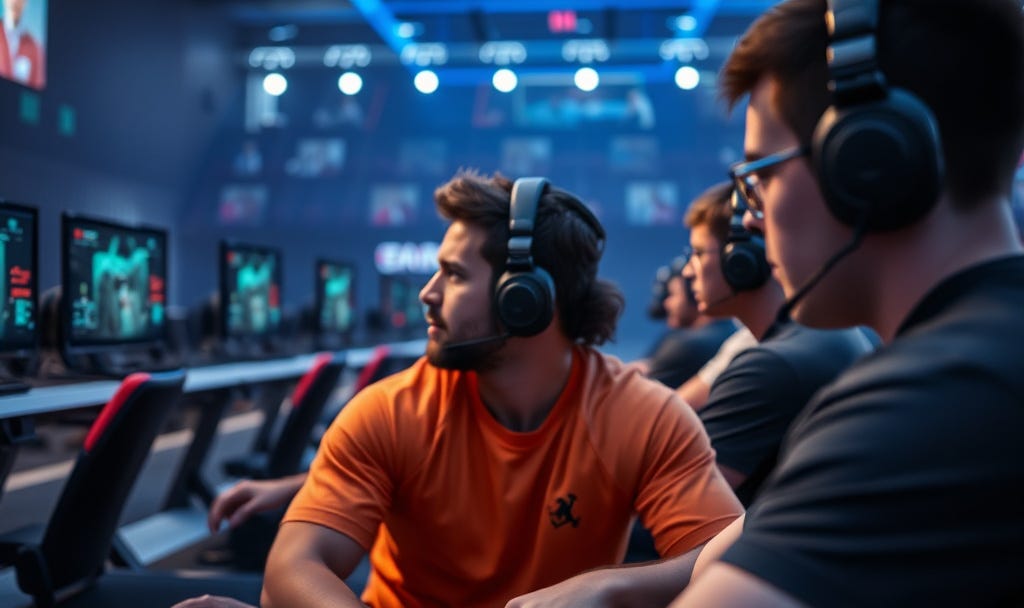
For decades, the image of the competitive gamer—the “esports pro”—was one of pure entertainment. Now, a seismic shift is occurring. It’s a shift that recognizes professional gamers not just as entertainers, but as elite Cognitive Athletes, and their arena—the highly competitive world of esports—as the ultimate, unconventional training ground for the next generation of critical infrastructure professionals.
I propose a revolutionary concept: treat the human mind not as a mere processing unit but as a “cognitive muscle” that requires deliberate, metrics-driven conditioning for cyber and tech jobs. This is more than a metaphor; it’s a vital re-framing of professional development for an era dominated by AI and accelerating cyber threats.
The True Metrics of a Pro Gamer: More Than Hand-Eye Coordination
When we watch a top-tier esports final, we often focus on the spectacle: the rapid-fire clicks, the split-second maneuvers. What we miss is the rigorous mental architecture underpinning that performance. These athletes are performing complex operations under peak pressure that directly mirror the challenges faced by a cyber defender during a live attack.
Consider the neurological demands. A study published in Frontiers in Human Neuroscience in 2023 found that professional esports players demonstrate significantly enhanced sensorimotor rhythm (SMR) and frontal midline theta activity compared to non-gamers. Translation: they exhibit superior capacity for sustained attention, inhibitory control (ignoring distractions), and efficient cognitive processing. In essence, their brains are hyper-optimized for the very tasks that define success in high-stakes IT and cybersecurity operations.
Real-World Stress Test:
Rapid Decision-Making: A top League of Legends player might make dozens of critical, non-linear decisions in a single minute, analyzing vast amounts of real-time data, assessing risk, and coordinating complex maneuvers with teammates—all within fractions of a second. This is the same cognitive loop a Security Operations Center (SOC) analyst runs through when triaging a sophisticated malware outbreak: identifying the threat vector, assessing its spread, and isolating systems under immense time constraints.
Pattern Recognition Under Duress: In games like Counter-Strike 2, professional players are trained to recognize subtle audio and visual cues—patterns of movement, weapon sounds, flash timings—to predict enemy behavior. A cyber analyst defending a network must similarly recognize subtle, often camouflaged patterns in log data and network traffic that indicate an Advanced Persistent Threat (APT) attack. The ability to spot the anomaly under stress is the true measure of resilience.
(see my first blog for more on esports and cyber sports)
The AI Imperative: Condition the Human, Not Just the Code
The rise of AI has fundamentally changed the human role in technology. As AI takes on routine tasks, the human operator’s value shifts to high-level strategic reasoning, creative problem-solving, and managing the unexpected. The demands placed on this “cognitive muscle” are escalating.
According to a 2024 report by the World Economic Forum, the rapid pace of technological adoption requires workers to focus heavily on developing skills related to creative thinking, systemic thinking, and cognitive flexibility. This directly aligns with the skills honed in esports. Esports is an environment of constant meta-shifts, requiring players to continually abandon obsolete strategies and rapidly adopt new, unconventional solutions. This cognitive agility is the critical differentiator when facing an AI-driven adversary that can change tactics faster than any human-written script.
The traditional training model—focused solely on knowledge acquisition—is falling short. It builds the library (knowledge) and the tools (experience), but it doesn’t strengthen the physical capacity (the brain) to use them effectively during a crisis. Cognitive conditioning, by contrast, is about enhancing the processing speed and resilience of the human element.
(more to learn from video on AI in CTFs here)
Actionable Insights: Building the Superior Cognitive Athlete
The concept of “training like a pro gamer” isn’t about forcing corporate teams to play Fortnite. It’s about leveraging a data-driven framework of competitive performance.
Metrics-Based Conditioning: Esports teams use sophisticated telemetry to track performance under stress, measuring things like APM (Actions Per Minute), KDR (Kill/Death Ratio) as a proxy for risk/reward decision-making, and Gold Per Minute (GPM) as a proxy for efficiency. We can apply similar metrics to cognitive exercises, tracking processing speed, error rates, and sustained focus duration in training scenarios designed to mimic cyber operations.
Focus on Resilience, Not Just Competence: The core differentiator for a cognitive athlete is their ability to maintain performance after failure. Competitive gaming is a cycle of immediate feedback and adaptation. Training should integrate exercises that deliberately introduce high-pressure, resource-deprived scenarios to build mental toughness and prevent decision paralysis during a real-world critical event.
Integrate Non-Traditional Exercises: The keynote proposes embedding specialized cognitive games into professional development. These aren’t distractions; they are targeted neurological workouts. Think exercises that rapidly shift visual attention, require simultaneous auditory and visual processing, or demand instant collaborative communication. A 2021 study published in Nature Human Behaviour showed that training with action video games can improve performance in diverse tasks, suggesting these tools can be powerful, scalable cognitive boosters.
Bottom Line:
A Cognitive Workforce Framework™ would evolve academia, industry, and government: stop viewing the human operator as a weakness and start viewing them as an asset that must be conditioned like a champion. The future of tech resilience depends not just on faster networks or stronger firewalls, but on the superior, conditioned minds ready to operate like pros under the highest stakes.
Cognitive skills, or “cognitive muscle” capacity, differ from academic skills by focusing on mental agility, resilience, and processing speed, rather than just knowledge acquisition (”the library”). Academic learning builds foundational expertise, while competitive esports provides conditioning through metrics-driven exercises—like rapid decision-making under duress—to enhance the brain’s “physical capacity,” enabling individuals to effectively apply knowledge in high-pressure cybersecurity and IT environments where academic knowledge alone is insufficient.
It really boils down to this: you need to understand the difference between pure “brain power”—your cognitive skills—and what you learn in school. Competitive cyber esports is like a high-tech gym for your mind. It gives you the measurable, intensive training you need to sharpen your focus, boost your resilience, and speed up your thinking and your action.
Think of it this way: when a stray ball is about to hit a bystander, an athlete will reach out without thinking, reactively catching or hitting the ball away. This instantaneous, trained reaction is what we need in cybersecurity training, enabling protectors to easily and reactively take minimal action to dodge ad-hoc attacks. When you train your brain like a professional athlete, you’re better prepared to actually use your knowledge when under pressure and strain in operational cybersecurity and IT jobs where a good GPA simply isn’t enough to make you a high performer.
Like this? Join me at Marshall University CyberCON on March 27, from 2:05 p.m. – 2:35 p.m. for my keynote, “The Missing Link: Cognitive Condition - How Smart Esports are Changing Operations.” This session will delve into how the metrics and training methodologies of professional esports are creating a new blueprint for high-stakes operational readiness, particularly in the cyber domain. We will explore the science of the “cognitive muscle” and how unconventional conditioning is the essential ingredient for securing critical systems against future AI-accelerated threats. Don’t miss this opportunity to define the future of human resilience in the digital age.